Act 1
Cinematic beats and controlled power—told in frames.
Jump to: F001 · F002 · F003 · F004 · F005 · F006 · F007 · F008 · F009 · F010 · F011 · F012 · F013
Frame 001
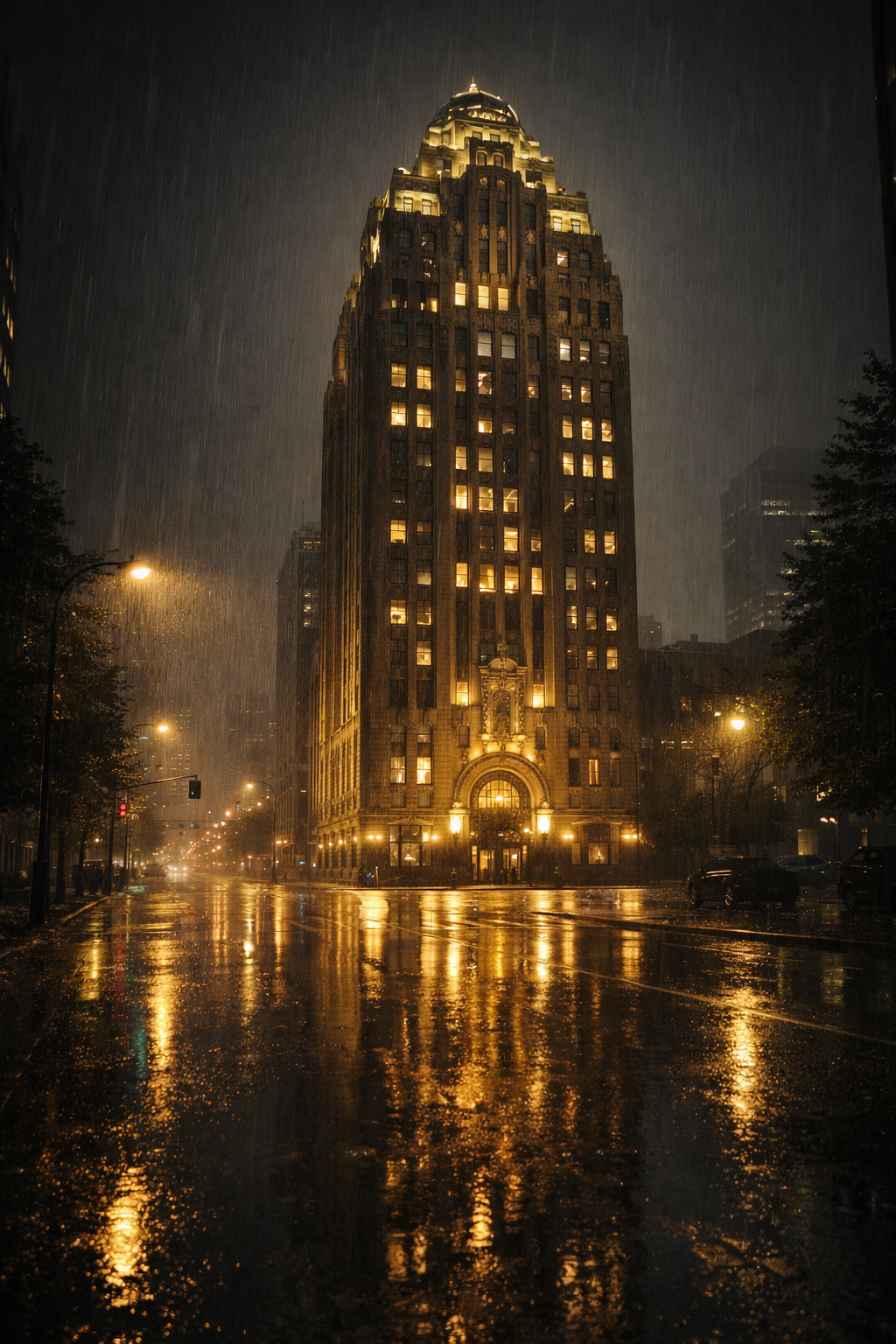
Rain glazed the streets around the Marine Building until the whole block looked dipped in amber and ink. Light from the windows scattered across the pavement in long, broken ribbons, and every passing reflection seemed to linger half a beat too long before slipping back into the dark.
The building rose above the empty avenue like it had no real interest in the century around it. Its crown burned softly through the weather, elegant and remote, too proud to look haunted and too old not to be. Even from the sidewalk, it carried the strange authority of something that had watched generations come and go without once needing to move.
Inside, the lobby held its silence like a secret. Dark marble swallowed sound, polished brass caught every warm lamp in soft gold, and the floor reflected the room with such fidelity that it felt less like stone than a memory pretending to be solid.
Frame 002
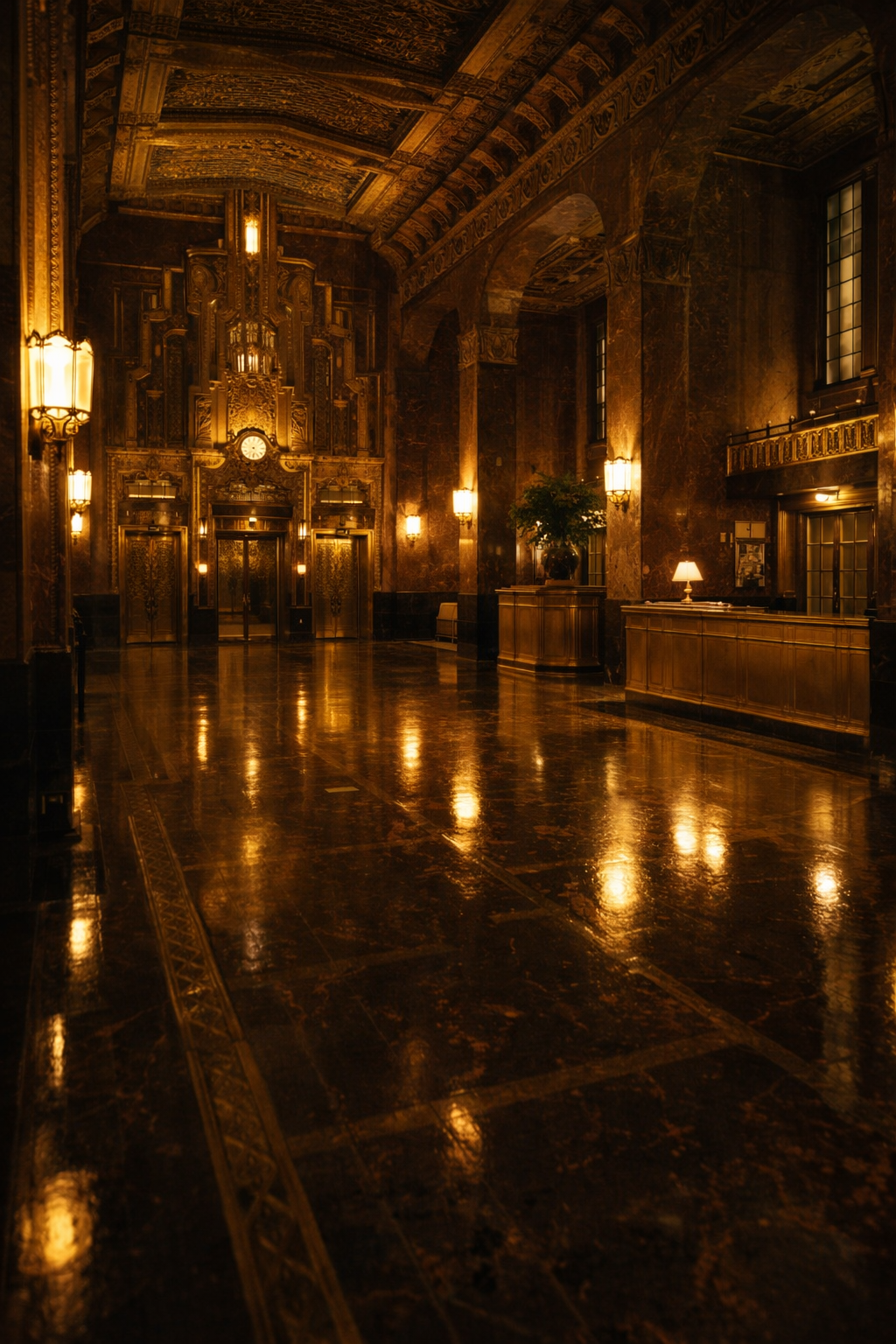
Nothing was out of place. That was the first unsettling thing. The reception desk sat empty and immaculate, the elevator doors gleamed under the art deco trim, and the lamps along the walls cast the kind of perfect light that made the emptiness feel intentional, as if someone had cleared the space for an arrival no one had announced.
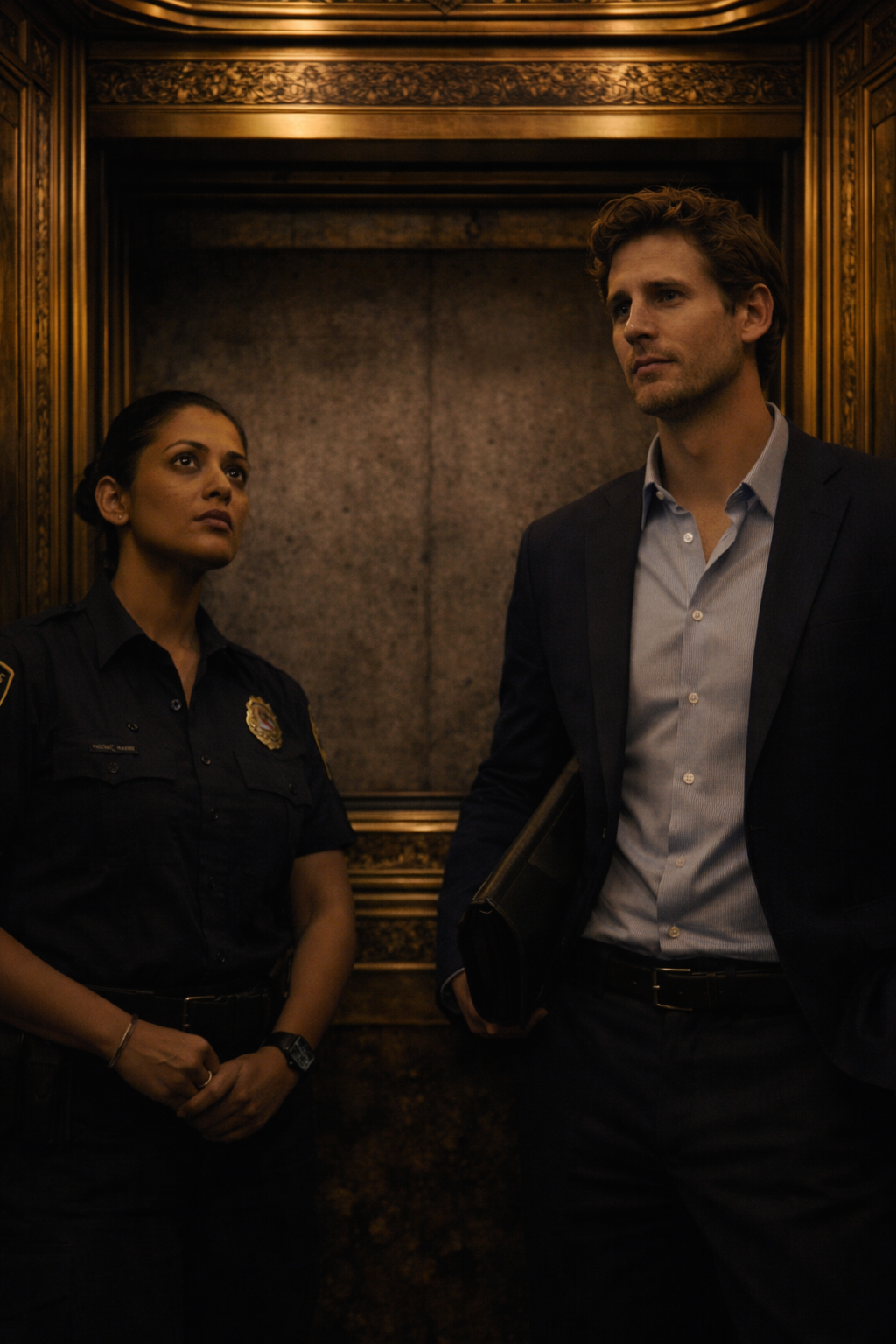
The night guard stood with the steady posture of someone who had learned how to make calm look effortless. Her uniform was crisp, her expression alert without being tense, and even after hours in the hush of the building she still moved with professional certainty, like routine itself had become a kind of armor.
Beside her, the architect looked like the sort of man who belonged in rooms lined with polished wood and expensive plans. He carried his portfolio under one arm, tie long abandoned, collar slightly open, exhaustion softening the edges of his composure without taking away the fact that he was, annoyingly, still very handsome.
Frame 003
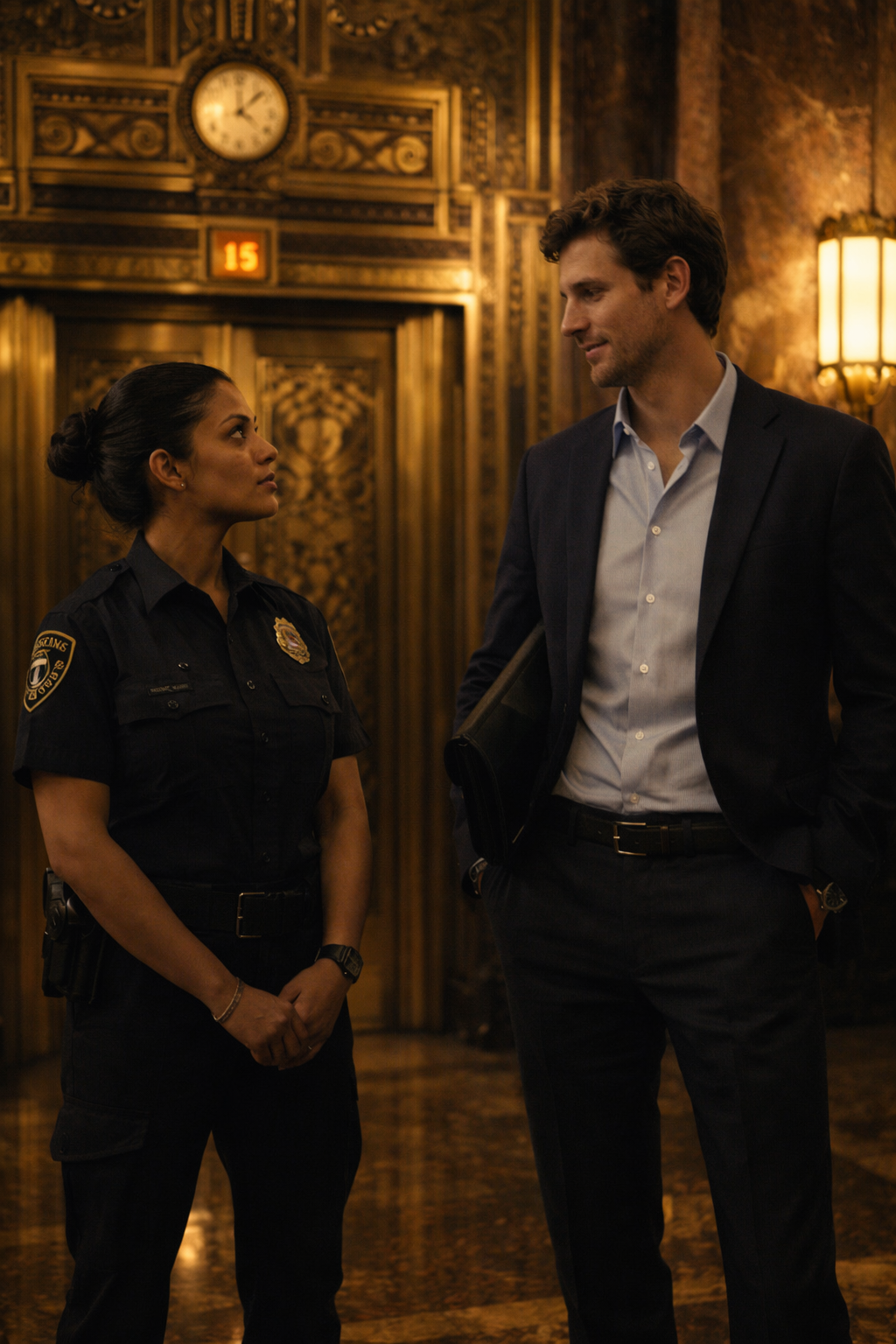
They shared the quick, almost amused glance of two adults trapped by a late errand. Nothing dramatic lived in that moment. Just tiredness, courtesy, and the faint relief of knowing someone else was still awake in the building.
Then the elevator doors closed with a softness that should have been reassuring, but wasn’t. There was no shudder, no metallic complaint, no ordinary sign of strain. Only a hush so smooth it felt less mechanical than deliberate, as if the building had made a choice and preferred not to explain it.
Warm numbers climbed the brass panel in patient order. The architect watched without thinking much of it at first. The guard barely glanced up. It was late, and elevators in old buildings had personalities. Everyone knew that.
Frame 004
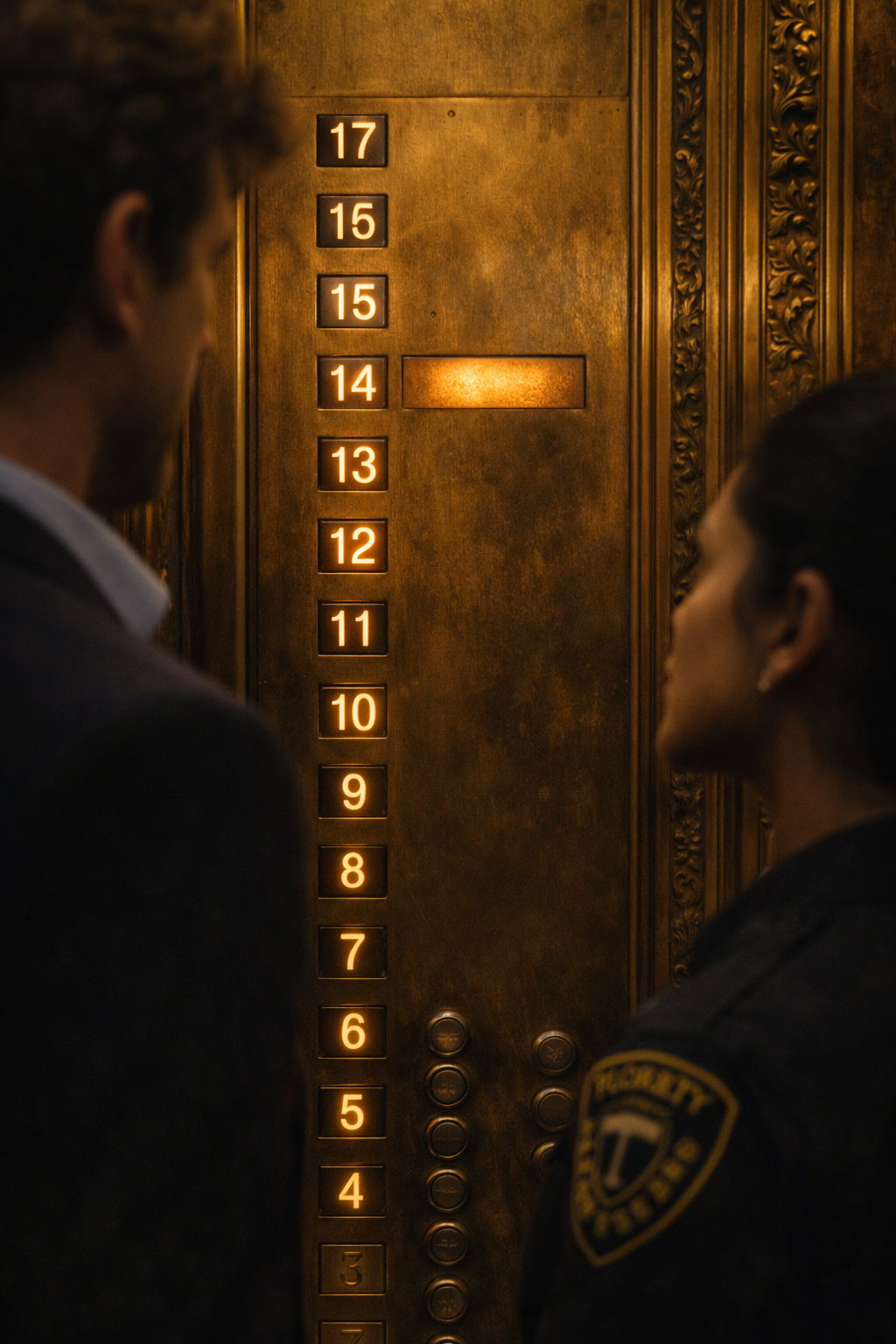
But then the ascent hesitated. The light lingered between familiar floors, trembled, and kissed a place that didn’t exist. Not thirteen, not fourteen, not anything named by the grid of ordinary use. Just a pause in the language of the machine, a brief stop where there should have been no destination at all.
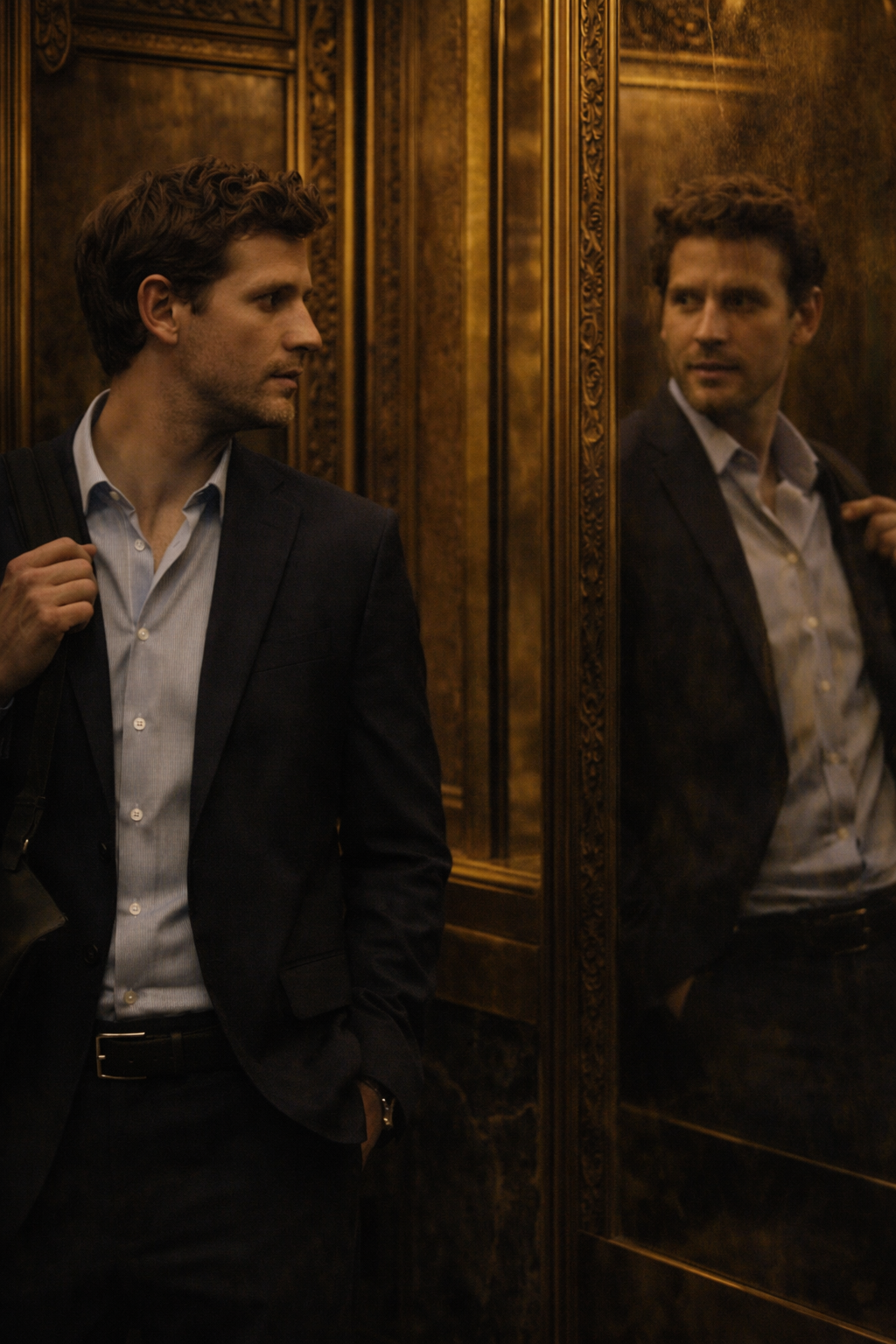
The architect straightened instinctively, adjusting his grip on the portfolio as though posture alone might fix the feeling that slid through the cab. In the brass beside him, his reflection followed the motion a fraction too late. Not enough to be theatrical. Just enough to make his mouth part slightly as he turned back for a second look.
The delayed image was gone by the time he really searched for it. Only his own face stared back, faint and warped by the age of the metal, handsome in that blurred way old mirrors make everyone look like a rumor.
Frame 005
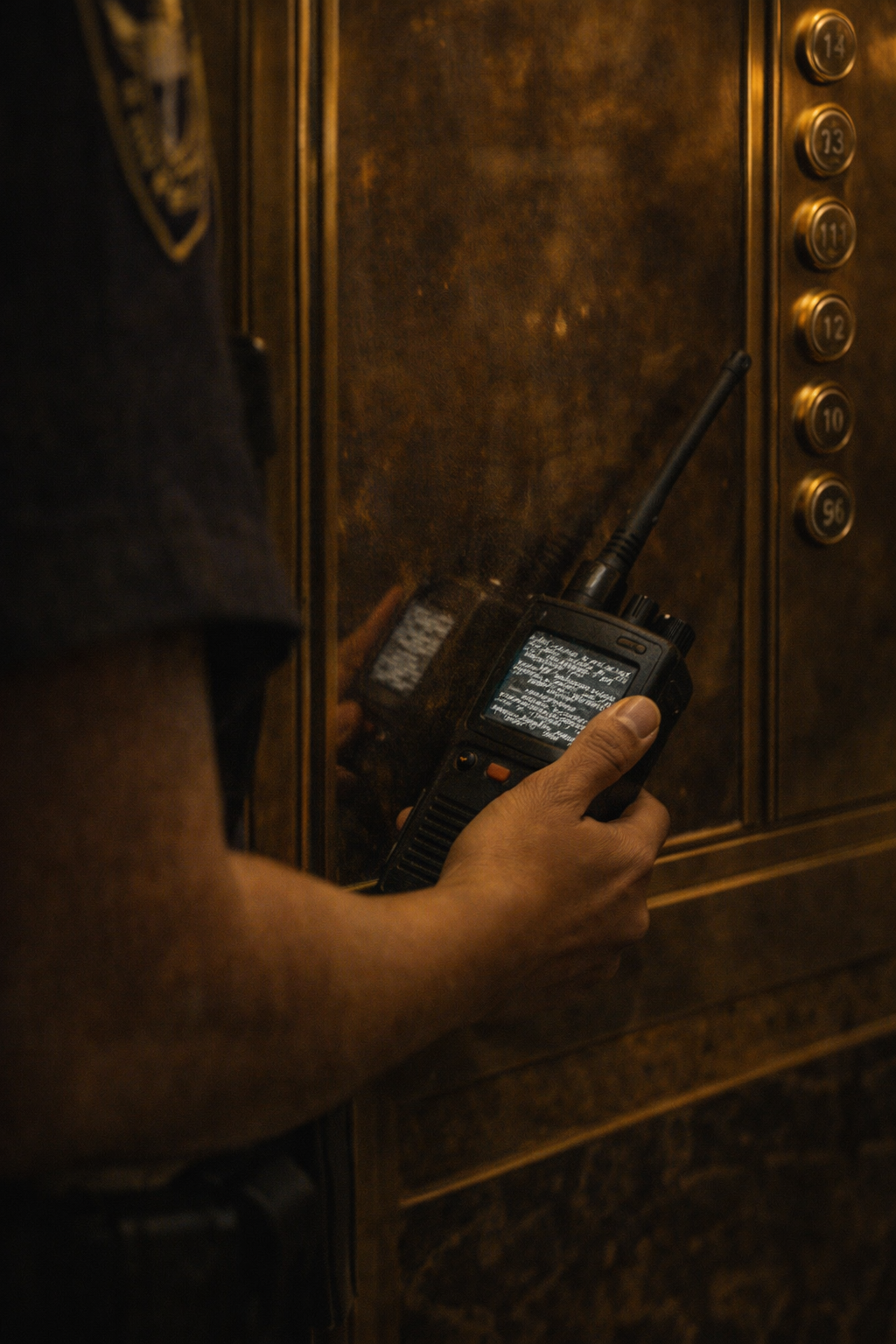
The guard raised her radio with practiced ease. Her thumb touched the button, her voice calm as she began to report the stop, and static tore through the speaker so sharply it seemed to scrape the air. The noise didn’t sound like bad reception. It sounded dry. Brittle. Like something crawling through wires and finding them useful.
She tried again, naming the elevator, naming the issue, almost naming the floor before the signal broke apart in her hand. The brass panel beside her shimmered with a faint electrical disturbance, so subtle it could have been imagination if imagination had not suddenly become the least comforting explanation available.
Frame 006
By the time the cab finally settled, it had not arrived anywhere meant for people. The light dimmed by a degree so small it would have been invisible in any cheerful place. Here, inside that capsule of aged gold and shadow, it changed everything.
Neither of them panicked. That was what made the tension sharper. Fear would have been loud, easy, human. What filled the elevator instead was a held breath, a mounting pressure, the intuitive knowledge that something had entered the situation without ever opening a door.
Frame 007
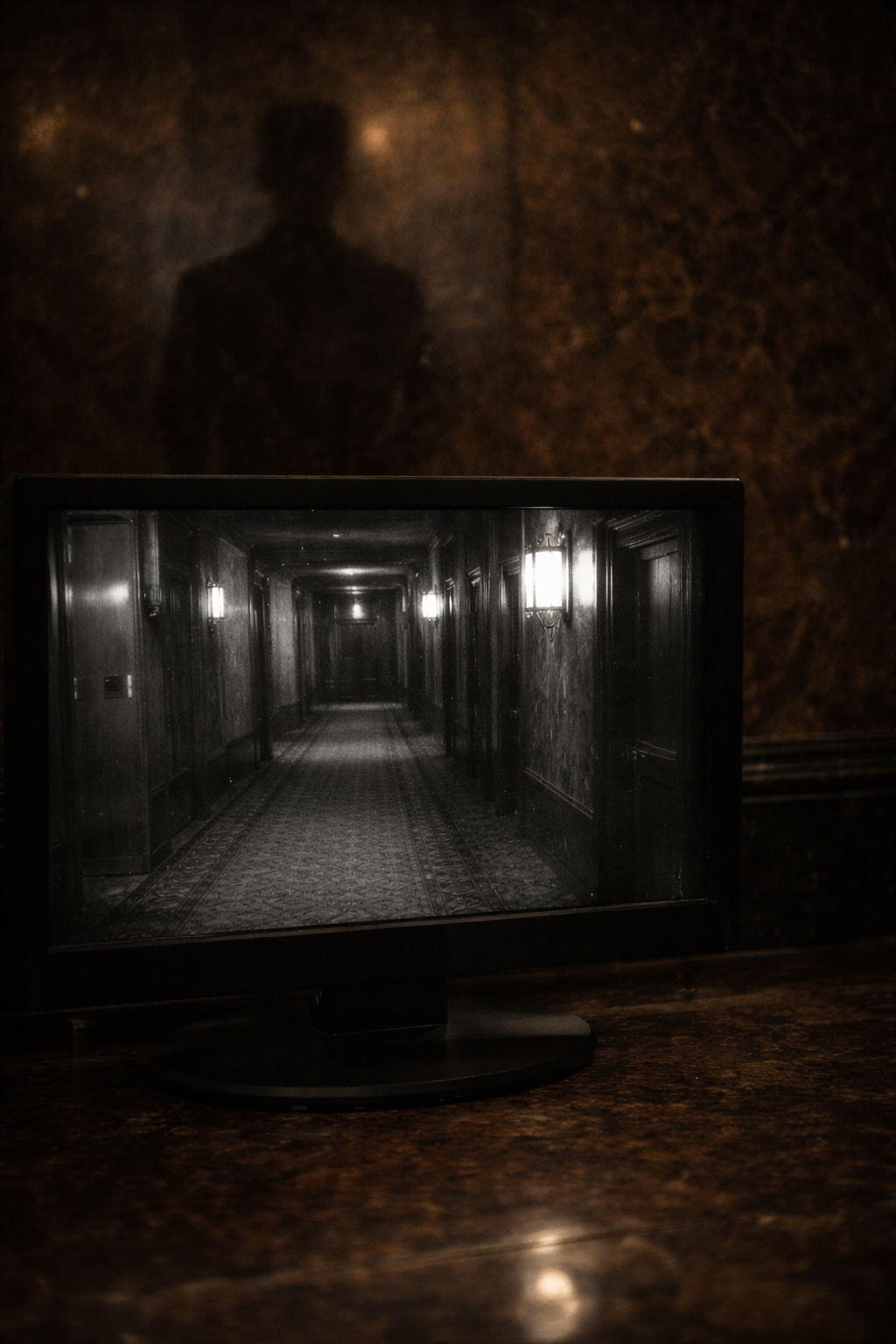
In the security station, the hallway feed showed a corridor so ordinary it felt insulting. Clean carpet. Closed doors. Soft Clean carpet. Closed doors. Soft sconces. No movement at all. Yet the glass of the monitor held another truth in its skin: the suggestion of a figure where there should have been none, a shape so still it seemed less like a person than the idea of being watched.
The building kept all of this with perfect manners. No alarms. No crash. No violence. Just small revisions to reality made in polished surfaces and old metals, as if the haunting had been taught etiquette and intended to keep it.
Frame 008
Outside, rain threaded down from the dark Vancouver sky in silver lines. Under the Marine Building’s marquee, where gold light met weather and steam rose faintly from the street, Sten stopped before the entrance as if he had arrived at the edge of an invisible sentence and needed only one breath to read the rest.
He did not look hurried. That would have cheapened him. His black cropped jacket framed his shoulders with surgical precision, his open collar cut a dark line at the throat, and his tailored trousers turned every step into something clean and controlled. The rain sharpened him rather than softened him. It made him look less like a man caught in bad weather and more like the weather had adjusted to suit him.
Frame 009
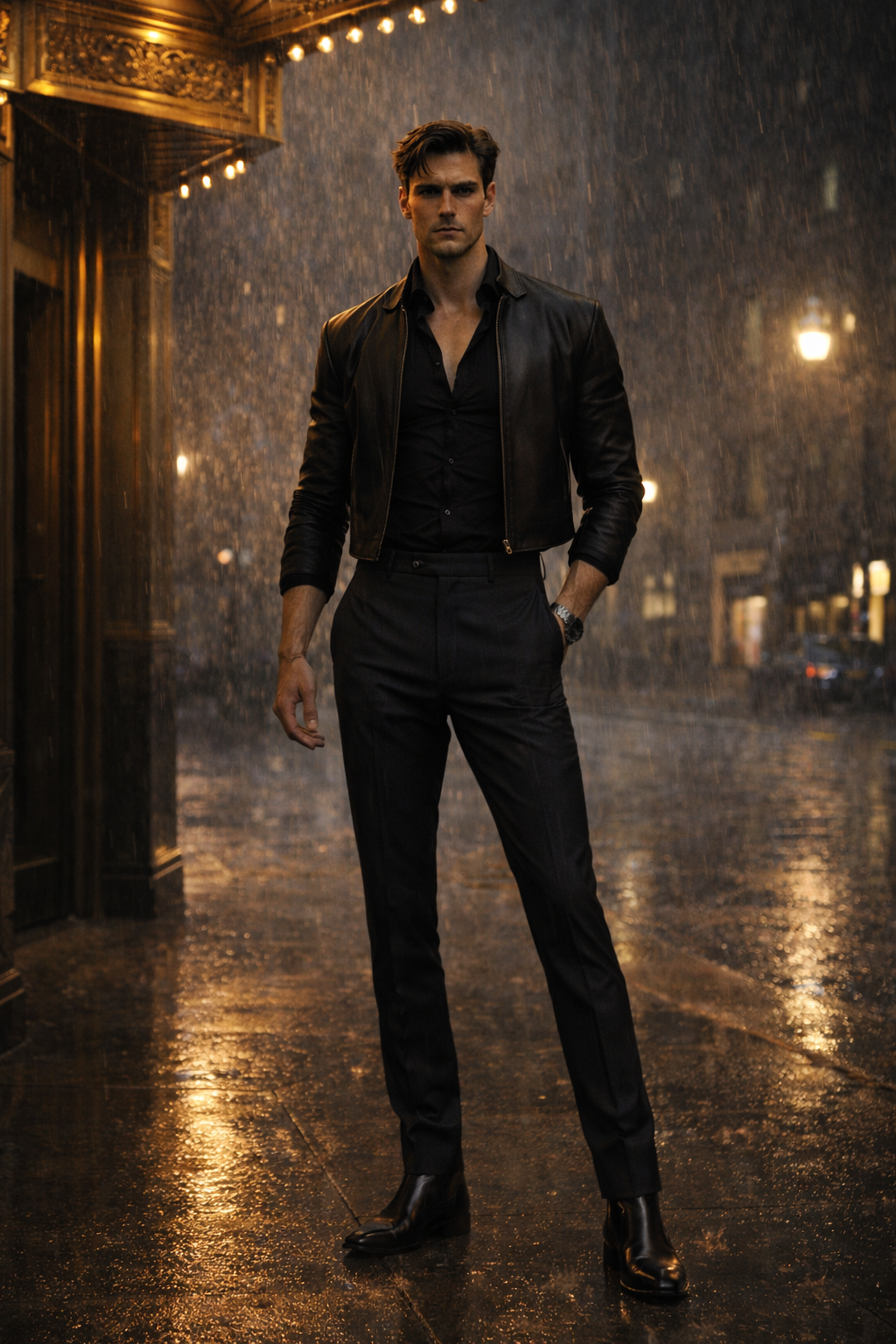
People often mistook stillness for passivity until they met someone who knew how to use it. Sten moved with that kind of authority. The kind that never begged the room to notice, because the room already had.
He crossed the lobby and the building seemed to tighten around his presence. Marble reflected him. Brass gathered his outline in long burnished strokes. Light found the angles of his jaw, the width of his back, the long exact line of his posture, and turned them into something more decisive than beauty. Something final.
Frame 010
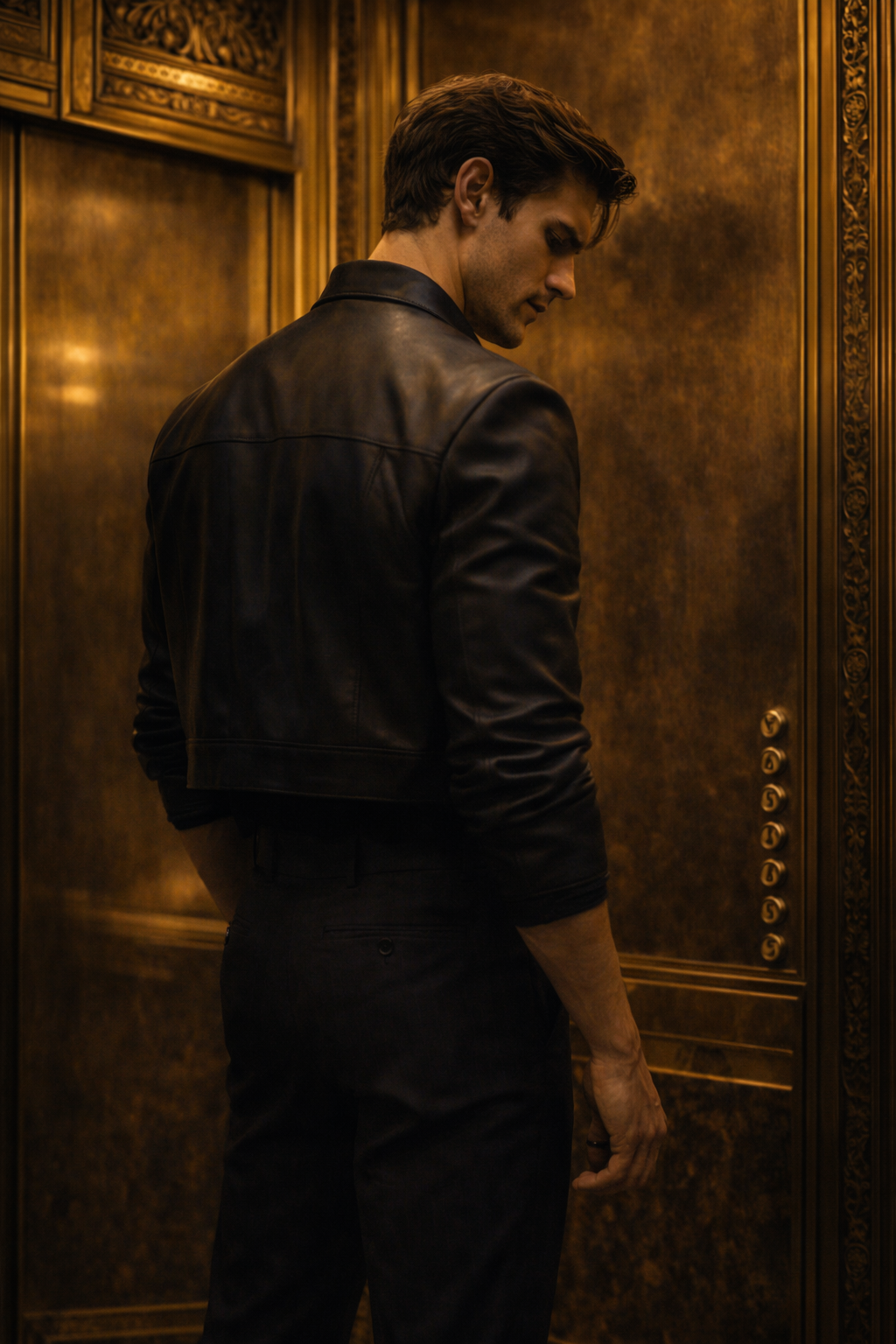
At the elevator, he stopped with one hand near the panel and lowered his head by barely an inch. Anyone else might have looked uncertain. On him, the gesture read as intelligence made physical. He was not hesitating. He was measuring.
The ring on his hand caught the light first, then answered it. A minimal violet halo unfolded where skin met brass and glass, delicate as breath on a mirror and precise as a blade. Some surfaces accepted the touch and stayed true. Others shifted under it, their reflections deepening by a fraction, as though another occupancy lay just beneath the visible one.
Frame 011
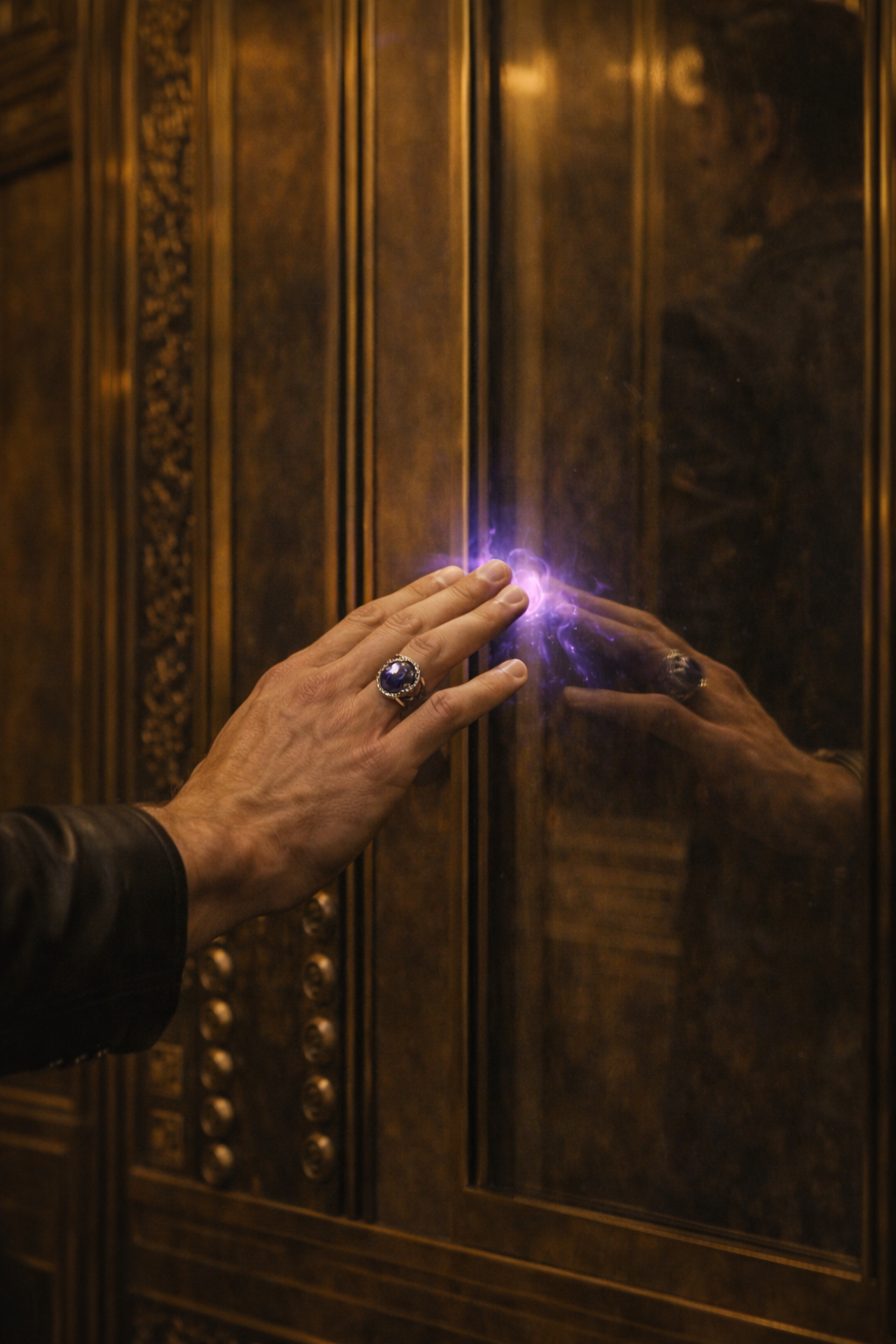
That was the thing about false spaces: they rarely announced themselves. They borrowed texture, light, symmetry. They used elegance as camouflage. The entity in the elevator had chosen well. This building was all reflective confidence and preserved glamour, all old wealth and glossy restraint. It was the perfect place for something that wanted to live in what people trusted at a glance.
When Sten looked into the panel, he saw it at once. Not a beast. Not a screaming ghost. A silhouette too slender, too near, and too intimate in the reflection beside the guard and the architect, like a third presence leaning into their personal space with the patience of something that believed it had every right to be there.
Frame 012
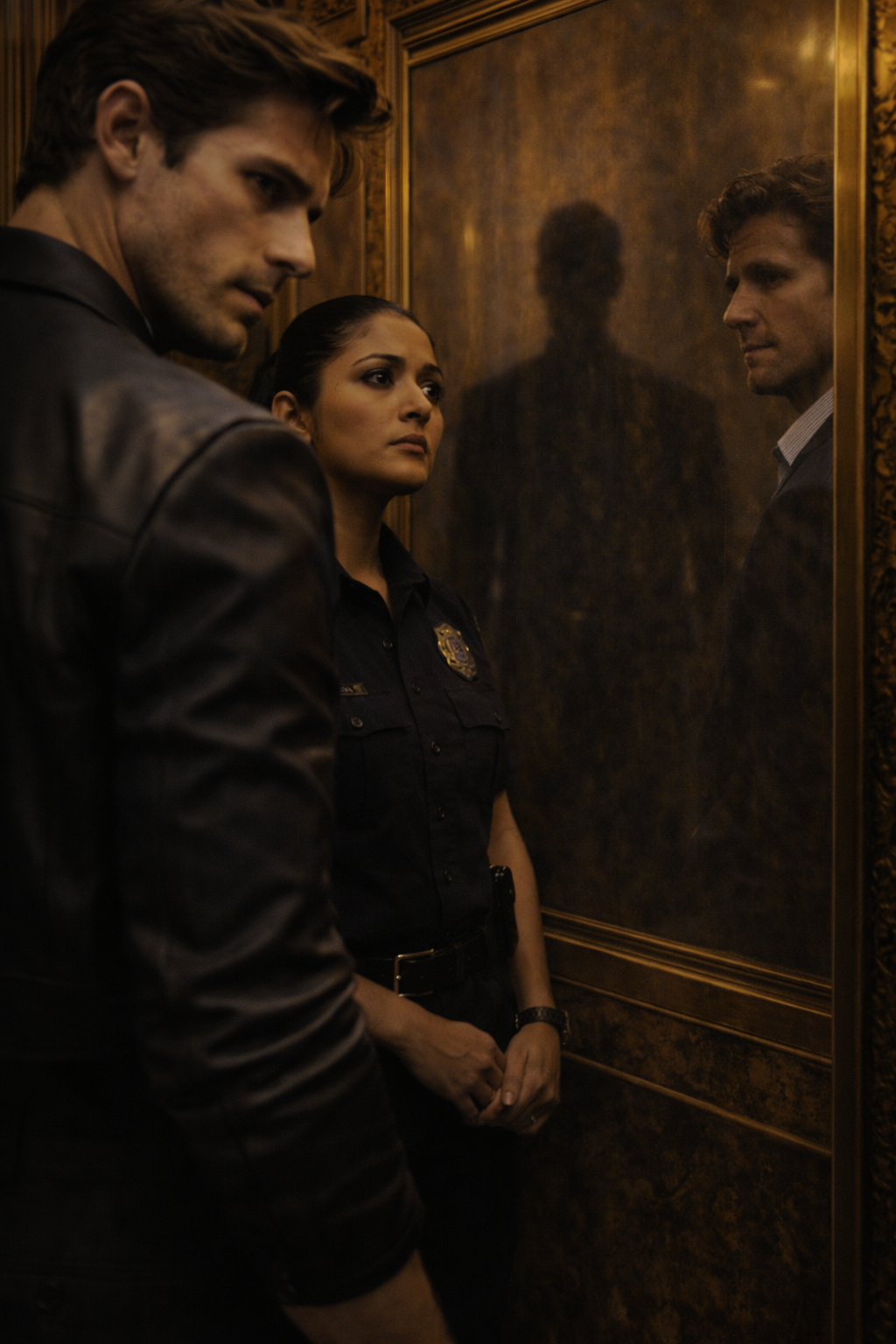
The civilians still did not fully understand what they were sharing the cab with. The guard sensed a wrongness and met it with discipline. The architect sensed it and met it with thought. But Sten saw the pattern beneath both responses. He saw the occupied surfaces, the misaligned mimicry, the way the reflection wanted not to frighten but to replace.
The elevator doors parted only enough to make the threshold feel dangerous. Tense metal. Tight gold light. A narrow seam between ordinary architecture and a mistake that had learned how to stand upright. Sten stepped into that seam without flourish.
Frame 013
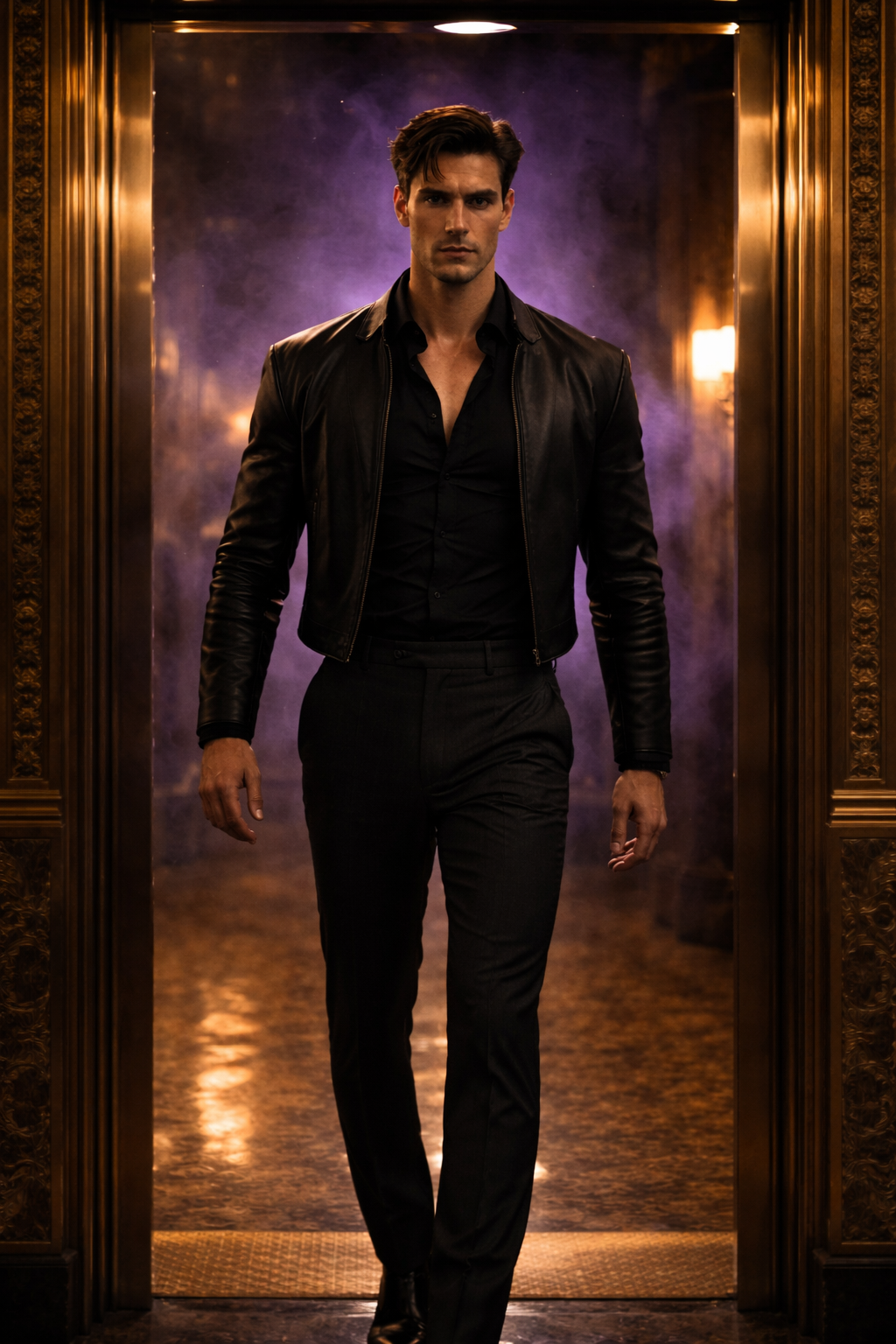
He did not attack. He did not need to. The first thing he offered the room was definition. A boundary. An answer to the pressure that had been mounting in silence since the cab began to move toward its impossible stop. His presence entered the elevator and changed the emotional temperature of the scene in an instant: not safe, not yet, but no longer helpless.
And that was how the first movement of the night truly began: with rain still whispering outside, with brass and glass holding their breath, with two trapped adults caught between disbelief and dread, and with Sten standing at the threshold like the building had finally been forced to admit that whatever had taken up residence inside it was no longer alone with its chosen prey.